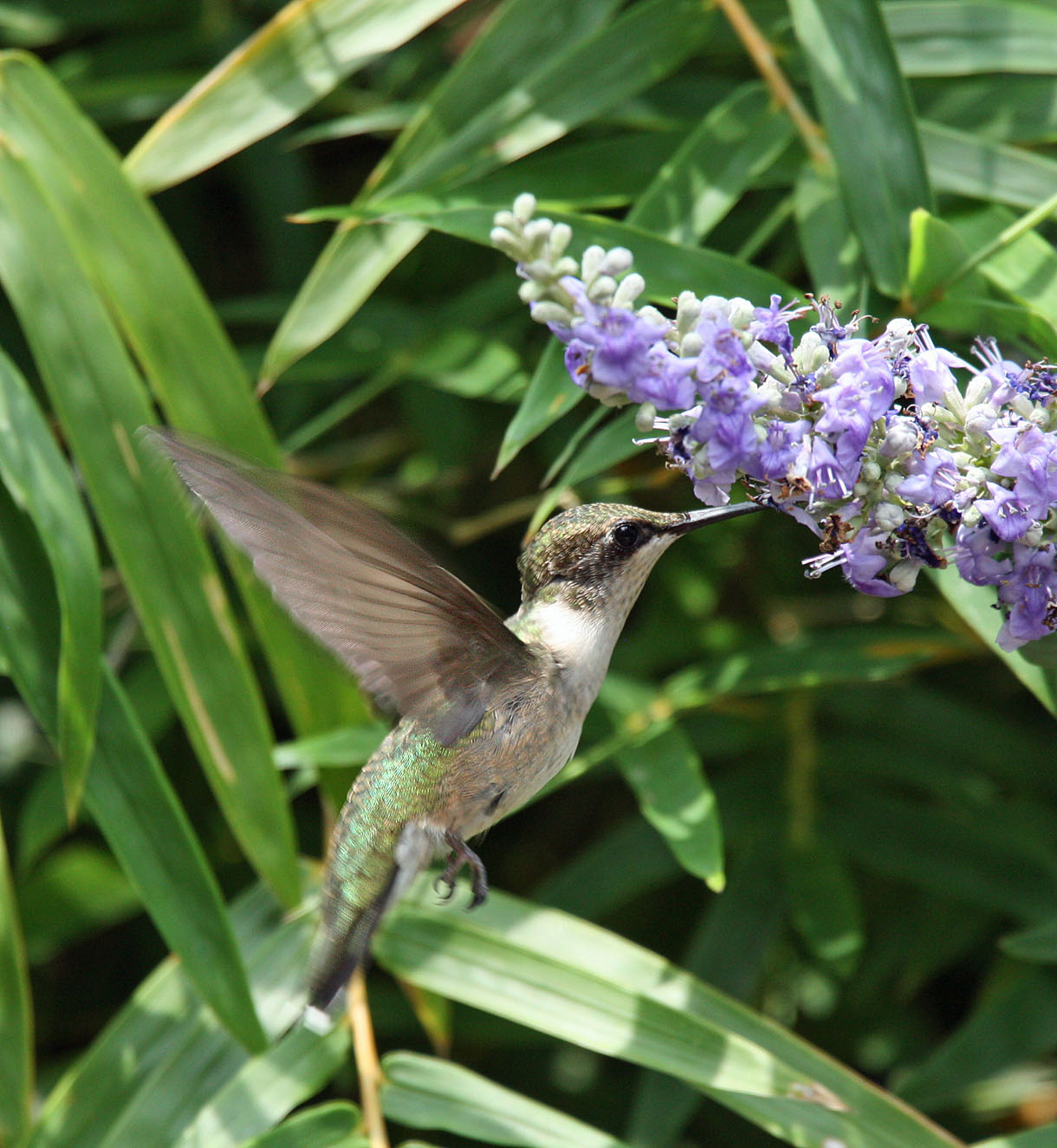
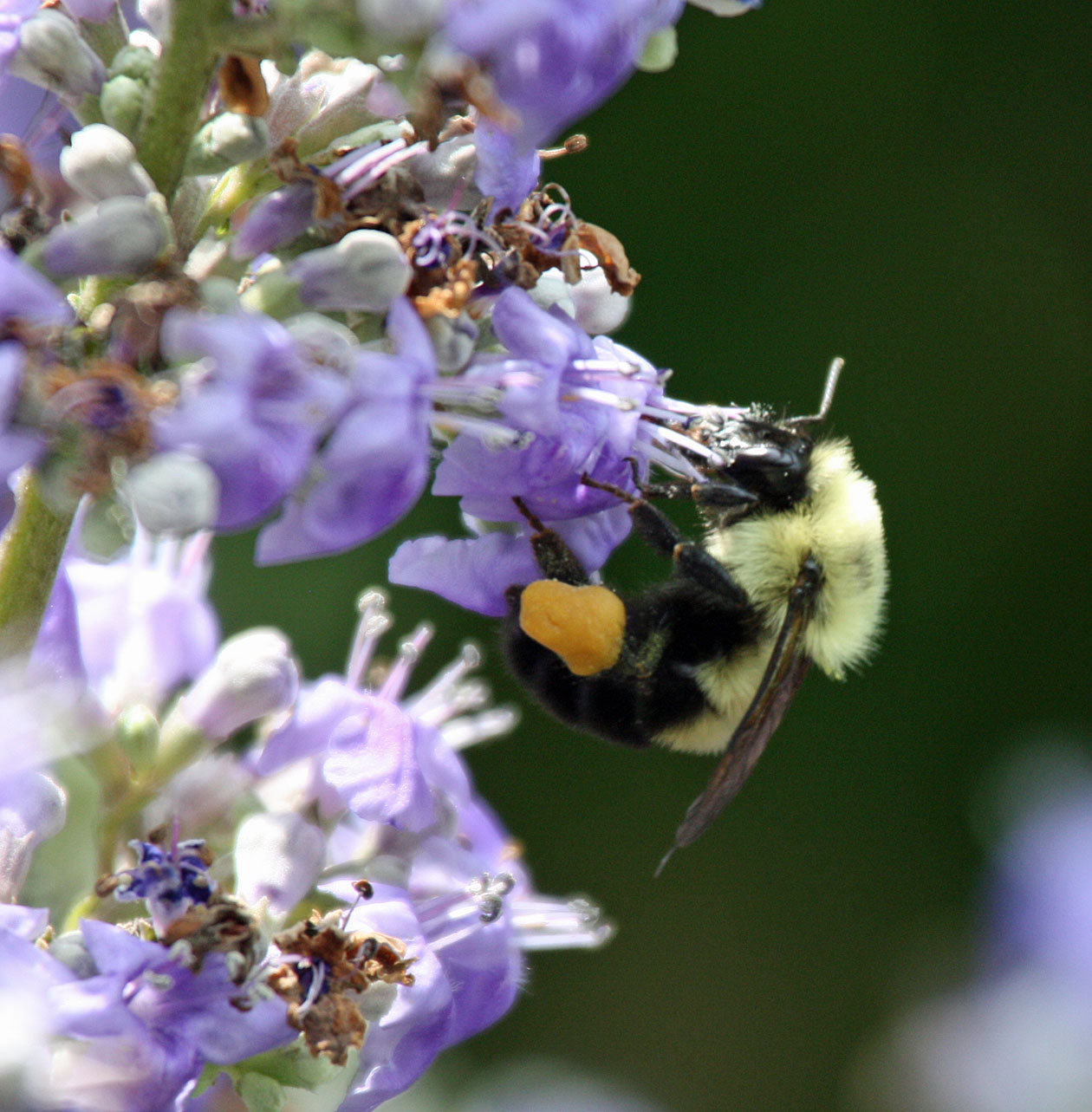
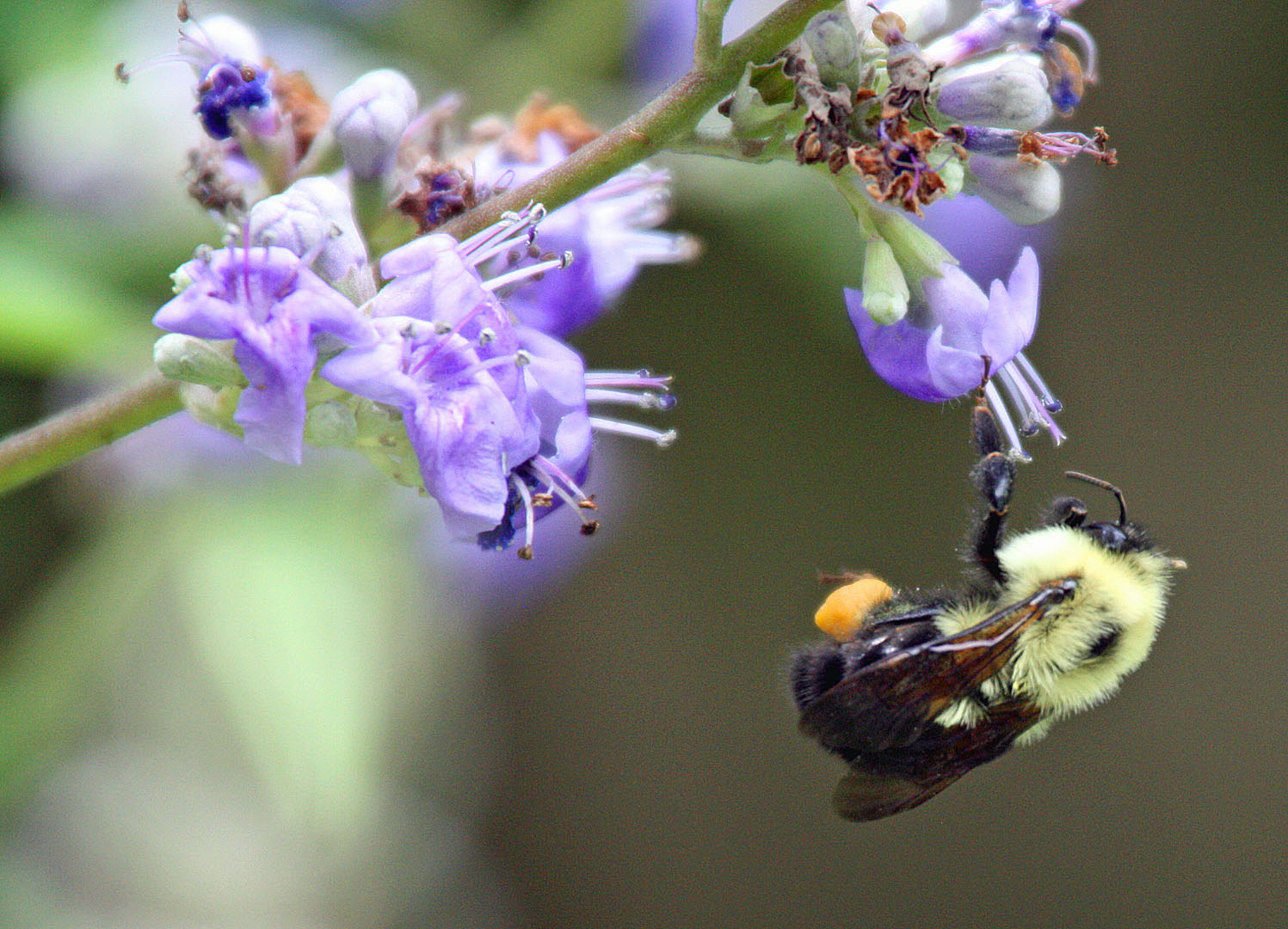
Our hummingbirds are becoming active again after their brief time out for nesting. I put fresh nectar in the feeders yesterday and this little one couldn't get enough ...


A few interesting facts I found about hummingbirds:
Hummingbirds are very intelligent, and are able to remember places and individual people from one year to the next.
For a hummer that hatched during the summer, there's no memory of past migrations, only an urge to put on a lot of weight and fly in a particular direction for a certain amount of time, then look for a good place to spend the winter. Once it learns such a route, a bird may retrace it every year as long as it lives (just think about the "awesomeness" of that!).
The initial urge is triggered by the shortening length of sunlight as autumn approaches, and has nothing to do with temperature or the availability of food; in fact, hummingbirds migrate south at the time of greatest food abundance.
When the bird is fat enough, it migrates (most hummingbirds of the United States and Canada migrate south in fall to spend the winter in Mexico or Central America).
It's not necessary to take down feeders to force hummingbirds to leave, and in the fall all the birds at your feeder are already migrating anyway. Hummers can remember food sources from previous years, and if you remove your feeder, birds will just feed elsewhere, but may not bother to return to your yard the next year.
Hummingbird expert Lanny Chambers recommends continuing to maintain feeders until freezing becomes a problem.
Hummingbirds can fly right, left, up, down, backwards, and even upside down.
They do not spend all day flying, as the energy expended would be prohibitive; the majority of their activity consists simply of sitting or perching.

Hummingbirds feed in many small meals, consuming up to five times their own body weight in nectar each day. To do so, they must visit hundreds of flowers daily.
At any given moment, they are only hours away from starving. They spend an average of 10-15 percent of their time feeding and 75-80 percent sitting and digesting.
Hummingbird bills are long and tapered, perfectly suited for probing into the center of tubular flowers and feeders for the nectar, which they take up at the rate of about 13 licks a second. Often one can see long translucent tongues spilling out of their long beaks, licking the air, as they approach bright colored flowers.

It is very important to keep fresh sugar water in our feeders and keep them clean. Only white granulated sugar is proven safe to use in hummingbird feeders. A ratio of one cup sugar to four cups water is a common recipe. Boiling and then cooling this mixture before use is recommended to help deter the growth of bacteria. The nectar should be changed every two or three days to ensure freshness.


Sources:
Hummingbirds.net, by Lanny Chambers, St. Louis, Missouri
The Hummingbird Web Site, Larry & Terrie Gates
Wikipedia
Journey North Hummingbirds
The Hummingbird Web Site, Larry & Terrie Gates
Wikipedia
Journey North Hummingbirds