
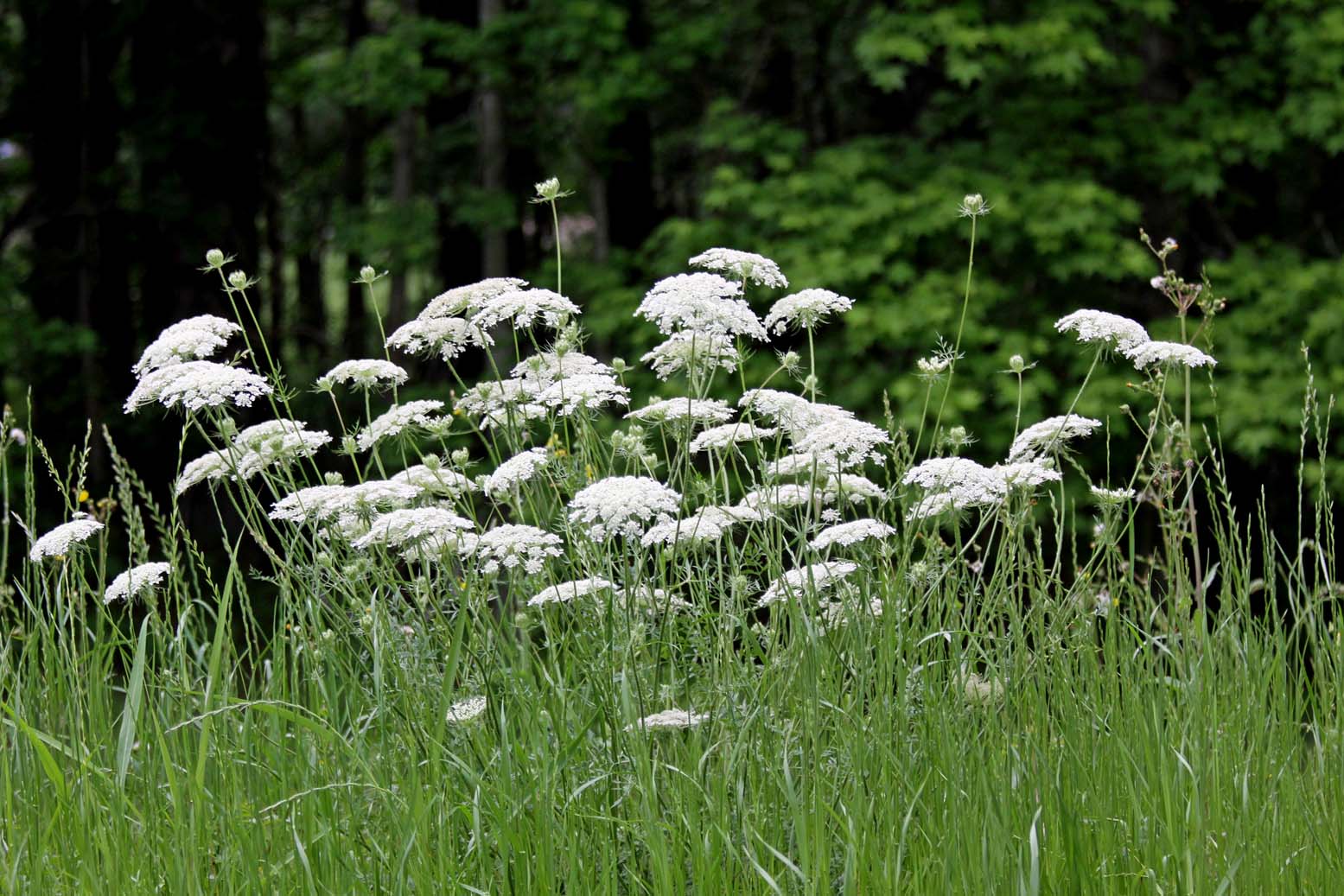
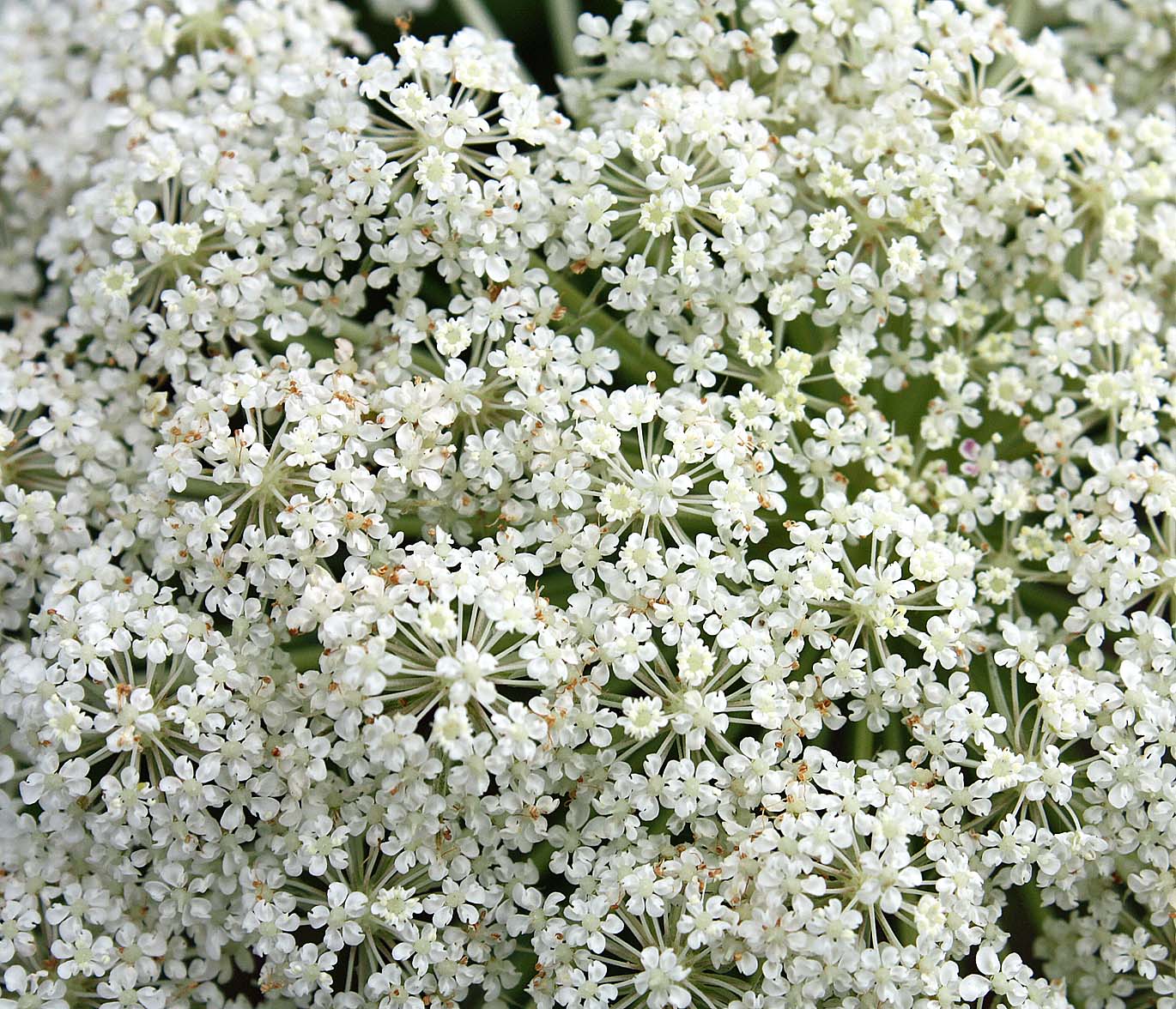
You're probably curious about the title for this post, but that's what came to mind as I took the pictures I'm sharing today. The "beauty" is an elegant wildflower called Queen Anne's Lace, and this time of year it can be found gracing our Mississippi roads, from the hill country of North Mississippi, to the flat coastal highways of the Mississippi Gulf Coast.
I recently went in search of Queen Anne's Lace in hopes of capturing some new pictures for my collection. I wasn't disappointed ...
There were patches of it growing everywhere along the country roads surrounding Vicksburg, and I was in my glory as I stopped to get close up shots of the lacy flower heads on top of the long graceful stems swaying gently in the breeze.
Think about that for a minute. Isn't that awesome!
This next flower reminds me of a pinwheel, and I wish I had gotten a better picture of it. I wonder what the odds are of my finding it again. Probably better than the odds were of my winning the Mega Millions lottery.
The little purple "heart" of this flower reminds me of a little butterfly floating deep within its center.
I'm so glad I captured my pictures before the big mowers begin their mowing season. There were wildflowers everywhere, and I love the red clover mixed in and amongst them.
I hope you will forgive me for getting so carried away with the "beauty" part of my story. I love Queen Anne's Lace, and get only one chance a year to capture and preserve a little of its beauty in my pictures. As I explored the back roads, I was struck by the contrast between the elegant Queen Anne's Lace, and the prickly Thistle plants that were mixed in and amongst the patches of the graceful flowers.
At first glance, thistle is not an attractive plant, and its "spines," or "thorns," or "prickles," are lethal.
I researched thistles while writing this post to find out what the "thorns" are called, and found the following information: "Thistles are non-woody plants that are outfitted with prickles, one of the three different kinds of plant armor recognized by botanists. Thorns are modified branches. Spines are modified leaves." [Source: Thistles] Whatever you want to call them, I found out from personal experience that they can be very painful (I was trying to shoo a bug away from a plant I was photographing and accidentally touched one of the needles).
But prickles or not, if you will look a little closer, you will see that thistles have a beauty all their own.
I hope I have inspired you to slow down and take some time to get a closer look at some of the wildflowers growing along the roadsides where you live. They're there for such a short time, but the experience of seeing them up close and from a different perspective will stay with you for a very long time. |
Showing posts with label Thistle. Show all posts
Showing posts with label Thistle. Show all posts
Tuesday, April 3, 2012
Beauty and the Beast





Saturday, April 2, 2011
Mystery Trees on the Trace
Yesterday, while traveling on the Natchez Trace between Natchez and Vicksburg, I did a double take when we passed by some trees on the side of the road. At first, I thought their bright bluish-purple clusters of flowers were Wisteria, but as we got closer, I could tell that the flowers were "spiky," and growing upright instead of cascading from a vine like Wisteria blossoms do.


We turned around and went back, and I, very carefully (as in "looking for snakes"), made my way down a hillside covered with wildflowers and thistle, and captured some pictures of the trees and flowers.

When I got home, I downloaded my pictures and did a quick search of Google Images, to try to identify the trees, but was unsuccessful (the closest I could find was a tree called Jacaranda, but its leaves aren't the same).
If any of you gardeners or tree experts who read this know what kind of trees these are, would you please let me know? Here are some close-ups, including a couple of pictures of their leaves (you can click on the pictures to enlarge them).


As I was taking pictures of the trees, I enjoyed the company of this pretty yellow Swallowtail who was happily exploring the thistle blooms surrounding me ...


As if the colorful "mystery trees" weren't enough, the butterfly was nice lagniappe for a beautiful Spring afternoon.
It didn't take long for someone to identify the tree for me. Here is a comment I received from Dot, who lives in North Georgia: "This tree is called Royal Empress tree or Paulownia. A very quick growing tree that kids love to climb in once it is strong enough to hold their weight." Thank you, Dot, for taking the time to clear up the "mystery" for me. I googled "Royal Empress" and found the following information: There has been lots of hype generated lately about the Royal Empress tree. It's one of those almost "too good to be true" plants, a fast-growing, easy-to-care-for, shade-producing hardwood, that has cascades of beautiful flowers. It does have its downside, however ... The Royal Empress tree originated in China and was bought to the United States about 160 years ago, and has since become an invasive tree in many parts of the country. It grows in most any type of soil, and has an uncanny ability to survive fire, drought, logging, and even bulldozing! It is best known in our eastern and southeastern states, but grows from coast to coast, though not in the northern plains states or parts of the upper Midwest. There are so many wondrous tales told about the tree that you would think everyone would want to have one. They are very fast growing. You can't sit back and watch it grow, but its daily growth is measurable. I also read that it can grow up to 15 feet in a year! Sounds kind of like kudzu in tree form, doesn't it! |
Thursday, April 8, 2010
The Good, The Bad, and The Ugly?
In 1966, there was a movie starring Clint Eastwood called The Good, The Bad, and The Ugly. Of course, Clint played the part of "the good" guy, with Lee Van Cleef playing "the bad" guy, and Eli Wallach portraying "the ugly" guy.

For some reason, that movie title came to mind the other day when I was taking pictures, and it occurred to me that the adjectives "good, bad, and ugly" can also relate to Nature. But then, again, perhaps it's just a matter of how we perceive things.
For instance, I'm sure we all think of pretty flowers and butterflies as being "GOOD things."


And I'm sure we would all agree that this is a "BAD" plant:

Yes, that's Poison Ivy. Notice that it has three leaves. Until I saw that photo, I thought I had some great pictures of poison ivy, but upon doing some research for this post, I discovered that I have some great pictures of Virginia Creeper instead.


I'm glad to know that that's not poison ivy, because it's in a flower bed on the side of our house. Just looking at that vine when I took the pictures (thinking it was poison ivy), made me shudder to imagine what suffering one drop of oil from those pretty little leaf buds could cause someone who is allergic to poison ivy (like me). Remember: "Leaves of three, let it be!"
Now that I've covered "The Good" and "The Bad," that brings us to "The Ugly."
This is the time of year when wildflowers start springing up all along the roadsides, and what a lovely sight they are to behold. However, while traveling on the Natchez Trace a couple of days ago, I noticed patches of Thistle growing amongst the clover and pretty yellow wildflowers.


I couldn't resist stopping to get a closer look at them through my camera lens, and I was so glad I did.

I know you're probably thinking that thistle is, indeed, ugly, and has no redeeming qualities ... but let's take a closer look.


The core of the thistle reminds me of a birdcage surrounding and protecting the seed pod (isn't God an awesome Creator!)


I have to admit that at first glance, the thistle is certainly not what you'd call pretty, and even seems to detract from the beauty of the other wildflowers. But, after seeing it up close, I found it to be beautiful, too ... in its own prickly way.
If there's one thing I learned from writing this post (other than Virginia Creeper is not poison ivy), it's that beauty is, indeed, in the eye of the beholder ... and, just like with people and books, sometimes you can't "judge a plant by its cover." No matter how "ugly" a plant may appear to be on the outside, they all have an inner beauty waiting to be discovered ... you just have to look for it.
Subscribe to:
Posts (Atom)


